SPA announces new executive committee for 2026/27

Apply now: The SPA needs new regional and project officers
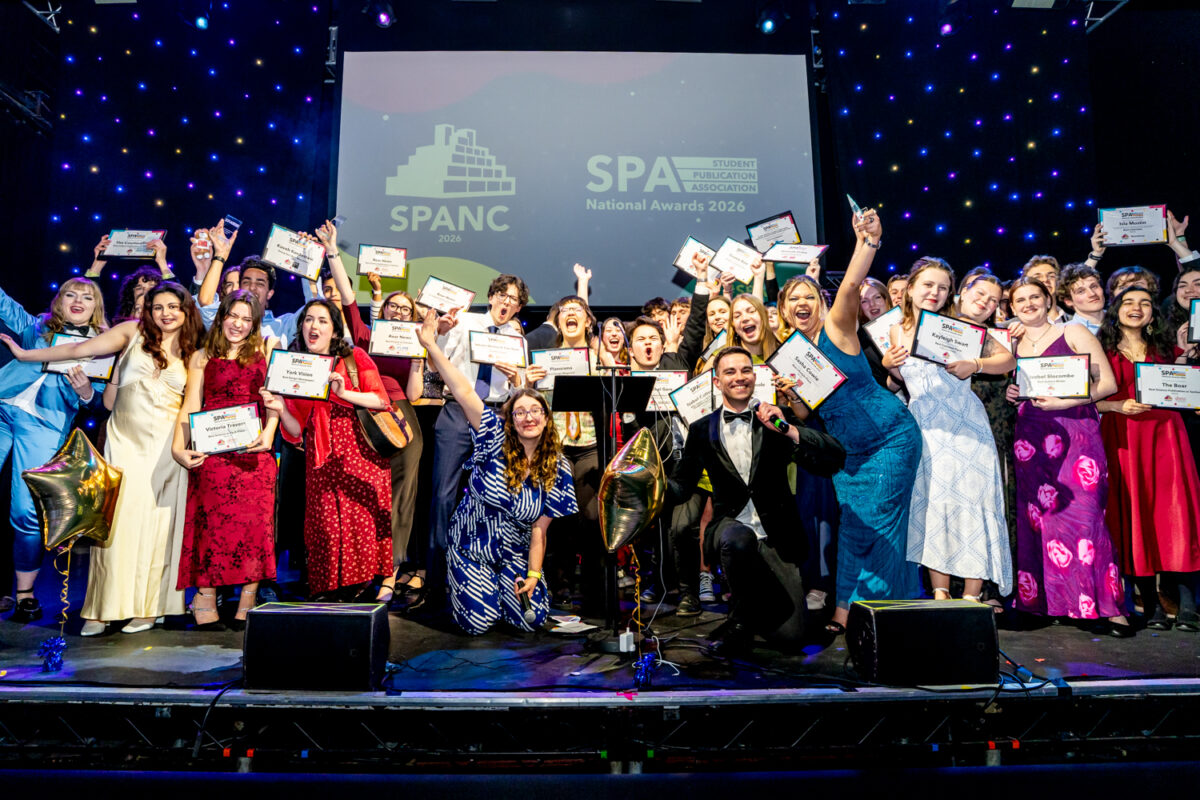
SPA announces winners of the 2026 National Awards
The Student Publication Association has announced the winners of its 2026 National Awards, recognising the best of student journalism across the UK and Ireland.
More than 1,400 entries were submitted this year, with judging panels drawn from across the media industry, including BBC News, The Times, The Guardian, Financial Times, Bloomberg, Sky News and Channel 4 News.
Judges praised the “exceptional quality” of entries, highlighting reporting that combined strong public interest, originality and impact, with the winners announced in a ceremony at #SPANC26 in Norwich on March 28th, 2026.
Full results and judges’ comments
Best Student Photographer
Winner: Jason Fong, Strathclyde Telegraph
Highly commended: Manraj Gill, The Saint
Alex Hickson, assistant news picture editor at The Times, said: “Jason’s photographs instantly bring the viewer inside the story. The composition of the first photograph is excellent showing both normality and comedy, while conveying the main themes of the story. The second image is exactly what picture editors look for in the newsroom when covering a protest - showing powerful emotion as well as being dynamic. The last image shows your skill in capturing a crucial moment in a live performance - often a difficult task.”
Of the highly commended entry, Hickson added: “Manraj’s images are of excellent quality - showing a great command of composition and timing. The first image captures a joyful moment which is often difficult in a hectic environment. The second shows a strong harnessing of light and shade, while also snapping a great reaction from the crowd. The final image is a hugely impactful and important news photograph. It shows a level of willingness to access remote, often dangerous, locations which is valuable work for photojournalists. Manraj’s images are of industry standard.”
He added: “It was a difficult award to judge and each photographer should be really proud of their work.”
Best Creative Piece
Winner: ‘The orgasm gap keeps me up at night’: Overheard at UoB’s performative male contest – Sofia Lambis, Epigram
Highly commended: Michael Spence, inside the mind – Elgin Edison, The Cheese Grater
Natasha Preskey, senior journalist at BBC News, said: “This piece had me scoffing. The writing is nicely understated and the journalist skilfully peppers the report with humorous references relevant to the target audience. Great headline and nice lighthearted use of stats.”
Of the highly commended entry, Preskey added: “Elgin’s absurdist humour had me chuckling to myself. Despite having zero knowledge of UCL or its staff, this satirical interview still felt incisive and entertaining. This was a risky format that could easily have fallen flat but it was well executed.”
Best Arts or Culture Piece
Winner: So, what was Weapons really about? – Eleanor Bate, Epigram
Highly commended: As dawn wakes: Bon Iver review – Charlotte Ward, Concrete
Alice Jones, deputy editor culture and books at The Times and The Sunday Times, said:“Excellent analysis of Weapons, tooled to engage audiences online. A nicely written blend of explainer, review, audience theories and the director’s own comments. I was hooked by it - and so were many others, it’s a proven hit online, probably because it speaks to how we watch and engage with films now. Smart.”
Of the highly commended entry, Jones added: “This is a polished and professional review of Bon Iver written with a critic’s eye and a fan’s heart. I really enjoyed it - particularly this line, ‘like watching somebody get their glow back after a long winter’ and the latter half of the review where it zeroes in on analysis over description. Very promising.”
Best Lifestyle Piece
Winner: My journey with herpes: why it’s not as bad as it seems – Sasha Cowie, The Courier
Highly commended: I went phone-sober – and I won’t go back – Hannah Foley, Concrete
Sophie Gallagher, features and lifestyle editor at the i paper, said: “A really brave piece to write - let alone publish. And not surprised that so many people have read it. I’m not sure I’ve ever seen someone write confessionally first person about having Herpes before which, as you say, comes with a stigma. Important to share, and done so in a smart way. Well done!”
Of the highly commended entry, Gallagher added: “Brilliant personality that really came through in this piece as a reader. Great structure - a diary is a good format to use. Nice pictures in there too - always important when doing an experiment piece to have someone take photos along the way. Good writing - with humour and readable tone.”
Best Comment Piece
Winner: Jess’s rule and the cost of reassurance – Isabel Cattermole, The Badger
Highly commended: Living with loss at university – Kayleigh Swart, Exeposé
Marina Hyde, columnist at The Guardian and co-host of The Rest Is Entertainment podcast, said: “An excellent use of the most deeply personal story to make a wider and truly important social point. I hugely admired how this veered between grief, pathos and proper anger – it would be extremely difficult to read this and not feel you had been persuaded both theoretically AND emotionally of the writer’s point. This was achieved by keeping both the personal and political horses running at once throughout the piece, which is a lot harder to do than people think.”
Camilla Tominey, associate editor at The Telegraph and presenter of the Daily T podcast, said: “Loved the raw honesty of this which will echo so many people’s experience of misdiagnosis. It melded personal experience with policy analysis very skilfully.”
Of the highly commended entry, Tominey added: “This brought tears to my eyes. I thought it was a sensitively and sharply written piece about parental loss, which laid bare the author’s grief without resorting to sentimentality.”
Best Sports Reporter
Winner: Elodie Cowan, The Saint
Highly commended: Rachel Gore, The Boar
Joe Harston, sport journalism trainee at The Times, said: “The impact and entertainment value across the three articles showed what a versatile writer Elodie is. The news feature had a perfect blend of primary and secondary research, allowing student athletes to share their stories to contribute to a wider conversation in women’s sport. Her feature-writing is filled with humour, colour and personality while still offering an insightful angle on two less popular sports.”
Of the highly commended entry, Harston added: “Writing impactful sports news can be extremely difficult in student journalism, but Rachel does this to a high quality in all three of these pieces. She did not shy away from writing original investigations on matters that evidently affect students’ enjoyment and participation in sport, and has written them in a clear and enjoyable way for a reader outside of that sphere.”
Best Science or Tech Piece
Winner: Inside COP30: What this year’s summit looked like and the part Durham played – Victoria Travers, Palatinate
Highly commended: Be part of research: How clinical trials can change your life – Jennifer O’Neill, The Mancunion
Anoushka Sinha, student representative at the Association of British Science Writers, said: “A well researched and extremely relevant piece. The critical review of Durham’s role shows critical analysis of the writer’s observations.”
Of the highly commended entry, Sinha added: “This article took a little-talked about topic and made it both comfortable and accessible for the reader. It was definitely an impactful and well researched piece!”
This award was also judged by Deborah Cohen, board secretary at the Association of British Science Writers and former editor of the BBC Radio Science Unit.
Best Interview
Winner: ‘I can’t guarantee my scholarship, or even my life’: Gazan student with Durham scholarship awaits evacuation – Isla Mustin, Palatinate
Highly commended: Goodbye Overheardrews? – Simon Ezra-Jackson, The Saint
Adam Fleming, presenter of BBC Newscast, said: “Amazing access to a very difficult to reach place, which provides the kind of granular insight into daily life in Gaza which was missing all too often in coverage of the story elsewhere in many established outlets. Showing that student journalism can be uniquely about students but also the wider news agenda at the same time. Clearly the product of great patience and an eye for detail.”
Mishal Husain, host of The Mishal Husain Show podcast, said: “An illuminating choice of subject, through which readers can connect with a faraway place. The small details of everyday life are told very well, revealing hardship and suffering. This would be high impact, and very nice to know from the supporting statement that Omar made it to Durham.”
Of the highly commended entry, Fleming added: “This made me feel like I was there during the conversation. It uses a story on a small scale to nod towards bigger societal issues about privacy and freedom of expression. It’s very well written but particularly well structured, with a great opening and a killer ending.”
Best Feature
Winner: The Oxford offer holders trapped in Gaza – Stanley Smith, Cherwell
Highly commended: Just a hangover? Warwick students at risk of missing meningitis symptoms – Rachel Gore, The Boar
Anoosh Chakelian, Britain editor and lead podcast host at the New Statesman, said “Prescient, thorough reporting through human stories, exclusive polling and research, which holds the institution in question to account.”
Patrick Strudwick, investigative journalist, editor, producer and presenter, said: “A fantastic subject, explored perfectly. Stan honed in on an unexplored area of the conflict, humanising the issue through strong case studies while evoking the wider struggle. Finding a fresh angle to the crisis and linking it to the UK is exactly what editors on British national newspapers would want.”
Best Investigation
Winner: Oxford University Catholic chaplain removed after student sexual abuse complaint – Archie Johnston, Stanley Smith, Arina Makarina, Gaspard Rouffin and Mercedes Haas, Cherwell
Highly commended: ‘You feel like a second-class citizen’: Life as a couch-surfing student in Edinburgh – Emilie Stewart, ENRG
Owen Gibson, deputy editor at The Guardian, said: “Meticulous reporting that treated the victim of abuse sensitively and had real impact - prompting others to come forward with their experiences.”
Cat Neilan, Whitehall editor at The Observer, said: “This story reveals not just the potential wrongdoings of one individual but the extent to which they were covered up, potentially exposing others to risk. An important piece of work.”
Of the highly commended entry, Gibson added: “Excellent reporting that could act as a jumping off point for further investigation of hidden homelessness among students.”
Neilan added: “A very worrying story highlighting the precariousness of students living without financial support.”
Best News Story
Winner: Gazan offer holders arrive in Oxford after evacuation – Conor Walsh and Stanley Smith, Cherwell
Highly commended: No injuries reported after fire devastates Arthur Vick accommodation block – Nikolai Morton and Tom Ryan, The Boar
George Parker, political editor at the Financial Times, said: “Thorough reporting on a really important subject, in which the authors got ahead of a really big story about the plight of Gazan students and the tortuous process to get the lucky ones to British university. An uplifting story from some very dark times.”
Tobi Thomas, health and inequalities correspondent at The Guardian, said: “Getting in touch with the offer holders who were in Gaza, following their story is both topical and emotive piece of reporting. The fact the reporter is still in contact with the students shows the rapport and trust built too.”
Of the highly commended entry, Parker added: “Enterprising journalism taking on a big breaking story at Warwick University and providing vital information for students about the fire at a hall of residence. From running a breaking story on the website within 40 minutes of being alerted to the blaze to regular updates through the evening, responsible and excellent journalism.”
Rising Star (Best Newcomer)
Winner: Kaveh Kordestani, Roar News
Highly commended: Claudio Mecklenburgh, The Mancunion
Josh Sandiford, freelance journalist, said: “Turning up to a protest and writing well about what you see is one thing but navigating reporting restrictions, emailing court staff, applying to a judge for press access and then producing a clean, legally sound piece is another. The fact Kaveh is a first year student is all the more remarkable. He is going to be a star.”
Sophie Huskinson, political correspondent at The Mirror, said: “Kaveh showed a wide range of impressive skills across their submissions, including court reporting, interviewing and feature writing. Their news report of a student being killed on campus showed a determination to grasp the rules of court reporting restrictions, with a vital and thorough article of the case produced. Their piece on KCL’s assessment changes was informative and inquisitive, showing off Kaveh’s strong news reporting skills and effective interviewing style. The TEXxKCL article showed Kaveh is also able to write colourful features, with an easy to follow yet characteristic account of the event.”
Of the highly commended entry, Sandiford added: “The Fallowfield immigration protest piece is breathtaking. On-the-ground reporting far beyond what I would expect from a student journalist. The bus strike piece also shows genuine investigative flair. This is proper news journalism that matters.”
Huskinson added: “I was particularly impressed by Claudio’s report on anti-immigration protests, which combined on-the-ground, local reporting with analysis of the national debate on asylum protests. It was thoughtful, thorough and informative. Claudio also displayed strong research abilities, with an illuminating and well explained read on geo-engineering. Likewise, in depth research on the context and significance of bus strikes in Manchester made for a strong public interest report on industrial action in the city.”
She added: “I found it extremely difficult to pick a top four and would like to make it known that every submission was incredibly impressive. All those in the shortlist should be so proud.”
Best Culture Writer
Winner: Isobel Slocombe, Forge Press
Highly commended: Valentina Vinciarelli, The Kingston Courier
Tanjil Rashid, culture editor at the New Statesman, praised Slocombe’s “intellectual seriousness” and commended what he called an “intelligent entry”.
Of the highly commended entry, Rashid praised Vinciarelli’s “stylish prose”, adding that their “writerly intelligence” shows great signs of development.
Best Reporter
Winner: Nick Miao, The Cheese Grater
Highly commended: Gaspard Rouffin, Cherwell
Will Lloyd, deputy editor at the New Statesman, said: “Stand-out reporting on the UCL society that sent a drone to Ukraine. No surprise to see that story have huge impact nationally. Sharp, economical writing on sensitive subjects and stories that challenge vested interests. The portfolio demonstrates great news sense, balance, and an eye for a scoop. I loved the way each story was framed.”
Sarah Booker-Lewis, local democracy reporter at Brighton and Hove News and Local Democracy Reporter of the Year 2025, said: “Nick’s pieces were very well written and engaging, covering important and serious issues. Good use of quotes. His work held decision makers to account.”
Of the highly commended entry, Lloyd added: “Terrific, in-depth reporting on tricky subjects, as well as reporting on issues that matter to the wider student community. Really impressive stories.”
Booker-Lewis also praised the “challenging” subjects confronted, including a “great” use of statistics.
Lloyd added: “This was so fun to do - the entries are very very high quality. I am actually slightly worried we are going to be out of a job soon. The thing I was looking at to distinguish the best entries was national impact. I also had a beady eye on who could write with real precision and economy.”
Billy Dowling-Reid Award for Outstanding Commitment
Winner: Harper Alderson, The University Times
Highly commended: Isabel Cattermole, The Badger
Fintan Hogan, winner of the 2024 Billy Dowling-Reid Award and graduate trainee at The Times, said: “For someone to step up and take on so much boggles the mind. Stories of all-nighters, InDesign glitches and student debates brings me back to my time in student media and reminds me of the kind of people I’d have wanted on my team. Clearly a consummate professional and devoted hard worker. Doubtless will go far.”
Annie McNamee, apprentice broadcast assistant at Times Radio, said: “Harper has been a brilliant all-rounder for the University Times this year. From creating an entire puzzle section to greatly expanding the paper’s Gaeilge section, her work has expanded the paper’s remit in multiple ways. She even organised debates with the iconic Trinity Philosophical Society. Harper stands out as not only an essential member of the paper’s community, but as a creative and original thinker who has gone well outside the box, and well beyond her job-description, to expand and improve her publication’s impact on campus.”
Of the highly commended entry, Hogan added: “A really impressive step up in responsibility and success in improving the financial standing of the newspaper. Few other applicants managed to give so much evidence of both being a team leader and an excellent reporter in their own right.”
McNamee added: “Isabel has dedicated herself to all elements of student journalism. From the exciting world of breaking stories to the much more mundane, but equally essential, fundraising and administrative work. On one instance, the paper literally would not have gone to print had she not given up a night’s sleep for it. It is clear that this year, the Badger has been fuelled by Isabel’s passion for it.”
Best Sport Publication or Section
Winner: Palatinate
Highly commended: Roar News
Michael Potts, sport editor at Radio Times, said: “The sport section in print is thorough, looks very appealing. The investigative piece into university sport will speak to so many students, while the counter-attack feature is a great little inclusion that readers will surely seek out in each edition. The online section covers a range of bases, including more students sport alongside a steady stream of global stories. Erica Murphy-Hogg’s ‘Is Gym Culture Making Us Lonelier?’ would not feel out of place if it were published on any esteemed national newspaper website. The quality of her writing is excellent – the piece reads so smoothly. It’s a nice length, insightful and she hasn’t overcomplicated her language. Erica genuinely made me pause to think. That’s journalism, right? Brilliant.”
Of the highly commended entry, Potts added: “Roar’s Varsity Edition looks like an absolute gem. It’s one thing being able to write about something you’ve just seen happen, it’s another thing to be able to research sporting events unlikely to be found anywhere else online. The writers have provided a great service to their university and shone a light on the events before taking place. I’m also impressed by the innovative live blog feature, a great tool that I’m sure could be rolled out across multiple sports, and awareness of the need to use social media to engage with fans.”
Best Science Publication or Section
Winner: The Boar
Highly commended: Roar News
Deborah Cohen, board secretary at the Association of British Science Writers and former editor of the BBC Radio Science Unit, said: “Interesting well written articles, with some connection with the university, others on issues of interest to students. Good range including news, features and opinion pieces.”
Of the highly commended entry, Cohen added: “Lots of well written news articles on a range of topics. Great connection with Kings College research.”
Best Culture Publication or Section
Winner: The Courtauldian
Highly commended: Quench Magazine
Barney Jones, professor of journalism at City St George’s, University of London and former editor of The Andrew Marr Show, said: “Brilliant production by talented staff who are studying art and turned out a piece of dazzling artwork themselves.”
Of the highly commended entry, Jones added: “Really student focused. Interestingly quirky.”
Best Project or Initiative
Winner: Roar’s broadcast – Roar News
Highly commended: Pathways to the Past – Rewind
Rob Milne, associate director at PLMR Midlands, said: “This project demonstrated a clear understanding of how the media industry is changing and the need for newsrooms to diversify into new formats to continue reaching audiences. The initiative is practical and reflects a model that professional newsrooms across the UK are increasingly adopting, but proves that you do not need to be a large national media outlet to do it.
“Supported by a strong use of social media to amplify content, clear impact in growth on social media channels. A key strength is that it does not abandon journalism in favour of entertainment, the distinction between Roar TV and Roar News TV ensures the content remains editorially focused. This is an excellent example of how student media can evolve and remain engaging while staying grounded in strong journalism.”
Of the highly commended entry, Milne added: “Impressed by the strong research, engagement with communities beyond the campus and the quality of its multimedia output, particularly the standard of the video production. By combining print, documentary filmmaking and short-form video, it brings together academic research and storytelling to bring local history to new audiences. The project’s mix of publication and public-facing events helped take the work beyond the campus. Excellent efforts to engage communities outside the university, through filming on location at sites across Warwickshire and a series of public events, while internally the approach to participation enabled more than 50 students to get involved.”
Best Website
Winner: The University Times
Highly commended: ScienceMind
Julian Sturdy, lecturer in broadcast and digital journalism at UEA, and Barnie Choudhury, lecturer in broadcast and multimedia journalism at UEA, said of the winner: “UT certainly punches above its weight. Making it SEO friendly has paid off massively. This website doesn’t just serve the student population; it has a massive overseas following, especially in the States. There’s an international focus, as well as inclusivity and down-to-earth reporting of news and local sport.”
Of the highly commended entry, they added: “This is a professional and impressively laid out website. We were blown away by the graphics, the clean appearance and the sheer volume of the content. As a library of scientific volumes, it serves a fabulous educational purpose. It’s easy to access and I especially liked the podcast section… The search bar also makes it easy to scan past editions.”
Best Overall Digital Media
Winner: Palatinate
Highly commended: Cherwell
Ellie Beetham, head of social creative at DMG New Media, said:
“Palatinate demonstrates a strong and thoughtful approach to multimedia storytelling; good use of Instagram Reels, podcasts, newsletters and interactive content, showing a clear effort to diversify formats and engage audiences beyond traditional print. It’s strengths are: 1) A strong use of short-form video, particularly engaging Instagram Reels. 2) Effective podcast expansion, building on previous success. 3) Interactive elements such as quizzes, polls and surveys create strong community engagement. 4) Regular newsletter output and good use of behind-the-scenes content to showcase the team.”
David Chipakupaku, podcast promotion producer at Sky News, said: “Palatinate have impressed again this year, with exciting, multi-platform thinking that shows off the best of their work. I’m particularly impressed with the dedication shown to inclusivity, allowing those with accessibility needs to be involved in the student community.”
Of the highly commended entry, Beetham added: “Cherwell provides one of the strongest multimedia strategies in the category, combining clear social media formats, engaging video content and interactive audience engagement. The publication demonstrates a well-rounded and highly professional approach. Its strengths are: 1) Excellent Instagram carousels with clear categories and strong information delivery. 2) Engaging Reels, including vox pops and informative videos. 3) Good behind-the-scenes newsroom content that connects audiences to the team. 4) Strong use of polls and interactive features, plus a regular podcast. 5) Good cross-platform awareness and audience tracking.”
Chipakupaku added: “A great use of multiplatform thinking, using the best of platform tools to tell the story.”
Best Design (Magazine)
Winner: THREAD
Highly commended: Planorama
Erica Weathers, head of design at the New Statesman, said: “Thread Fashion and Arts magazine excels at combining styled photography with dynamic typography, most notably on the contents page. It is both ambitious and thoughtfully executed. The recent redesign has successfully established cohesion alongside an elevated brand identity. By working within intentional constraints, a simple palette and minimal font styles, the magazine achieves exciting layout solutions that utilise negative space and the typographic grid in engaging and innovative ways. Most importantly, I can imagine that the magazine cultivates a sense of aspiration among fashion and arts students, not only to be seen reading it, but, more significantly, to be featured within its pages. In doing so, it fosters a loyal and engaged community, something all successful magazines ultimately strive to achieve.”
Alice Pomfret, magazine and books designer, said: “A minimal, confident and assured design. Beautiful use of imagery and typography, you’re starting to build a successful identity for your publication.”
Of the highly commended entry, Weathers added: “Planorama, a LGBTQ student magazine, is a bold and expressive publication that successfully blends tailored photography with experimental typography. The visual identity feels dynamic and thoughtfully curated throughout. I was particularly drawn to the illustrations by Oriel Baker, which add a distinctive and expressive layer to the magazine. The design of the ‘Get Fucked Up’ game stands out as fresh and daring, while the ‘Queer Culture’ photo spread is both engaging and inclusive, capturing a strong sense of community. Overall, Planorama comes across as a vibrant and meaningful publication, and it’s easy to see how it could be invaluable to the LGBTQ community at Warwick.”
Pomfret added: “A magazine jam packed with personality, continue to have fun with designing this magazine - it’s showing.”
Best Design (Newspaper)
Winner: Epigram
Highly commended: York Vision
Isobel Frodsham, deputy news editor at Metro, said: “This is an excellent paper which I would easily pick up thinking it was Bristol’s local paper. The team’s use of cartoons and paintings within the paper really gives it an edge, and each page has been beautifully sub-edited.
“No errors, no mistakes and just the perfect amount of copy on each page. It’s the little things that also make this paper great; The post-it note from the editors on page 10 and the pull-out poster. The use of QR codes also shows that the team is really thinking about the modern-day approach to newspapers while still honouring their history.”
Of the highly commended entry, Frodsham added: “A really impressive design which could easily be sold among our current national newspapers. A clear, eye-catching design that sets itself apart from the rest with their strong use of graphics, photography and snappy headlines. I believe the team of York Vision have a bright future in the industry.”
Best Newcomer Publication
Winner: Graig Dispatch
Highly commended: Passion
Steph Spyro, deputy political editor and environment editor at the Express, said: “This publication is clearly driven by the determination and initiative of its founders, who built a team of student journalists from across the college without the benefit of existing infrastructure. They are to be applauded for their promotion strategy, including an ‘aggressive guerrilla QR code campaign’, especially in the digital age.
“A bilingual edition is also incredibly impressive. While the publication could move into its core news and features more quickly, and would benefit from greater consistency in typefaces and breaking up larger blocks of text, its colourful design is captivating and engaging. Overall, it is a delight to read, with consistently interesting pages and content that no doubt offers something for every student.”
Of the highly commended entry, Spyro added: “The Passion supplement stands out for placing people at the heart of its storytelling, with a wide range of inspiring and amusing pieces ahead of Valentine’s Day. Rather than relying solely on traditional ideas of romance, it broadens the theme to include experiences across other spheres of life (such as hobbies and education). It seems there’s also a strong understanding of its Kingston University audience. The publication achieves a strong balance between striking visuals and well-crafted text, while also having a varied editorial mix of sport, features and more hard-edged news. Although some pages feel more refined in their design than others, the overall package is lively.”
Best Specialist Publication
Winner: The Apiary
Highly commended: The Courtauldian
Freddie Whittaker, editor of Schools Week, said: “This is a beautiful publication that expertly balances text and images in a way that would give many commercial magazines a run for their money. I commend their ‘commitment to creating a literary artefact that was not simply a collation of individual pieces, but rather, a work of art in and of itself’.”
Ed Gove, senior producer at Channel 4 News, said of the highly commended entry: “A remarkable publication. Such a variety of content and so comfortably laid out. There is a wit and character in the publication that is rare to see. The curation of this is extraordinary, and the design is exquisite. I can see why so many writers within these pages go on to have further successes in writing, poetry and journalism. The incorporation of contributors from the university is testament to a bold and ambitious project by the editorial team, and the quality of their product. I am unsurprised to read that the print versions sold out their runs.”
Best Publication
Winner: The Cheese Grater
Highly commended: Epigram
Owen Meredith, chief executive of the News Media Association, said: “In a highly competitive category The Cheese Grater stood out as an innovative outsider with an eye for engaging design, challenging the establishment with compelling and relevant stories that have found an audience. Their digital strategy and growth speaks for itself with a determination to reach readers where they are with a multi-platform approach while investing in the print product. Overall, they have shown commitment to delivering journalism that champions its readers and delivered impressive engagement and results.”
Of the highly commended entry, Meredith added: “Compelling story telling with a clear editorial direction and ethos embedded in student life, the team take their storytelling seriously and have a clear editorial focus and commitment to standards. With a clear focus on their audience and the stories that matters to BU students, Epigram has demonstrated an innovation strategy that is delivering results and growing reach.”
He added: “Some really good entries and not much between the standout ones. A tough batch to judge.”